

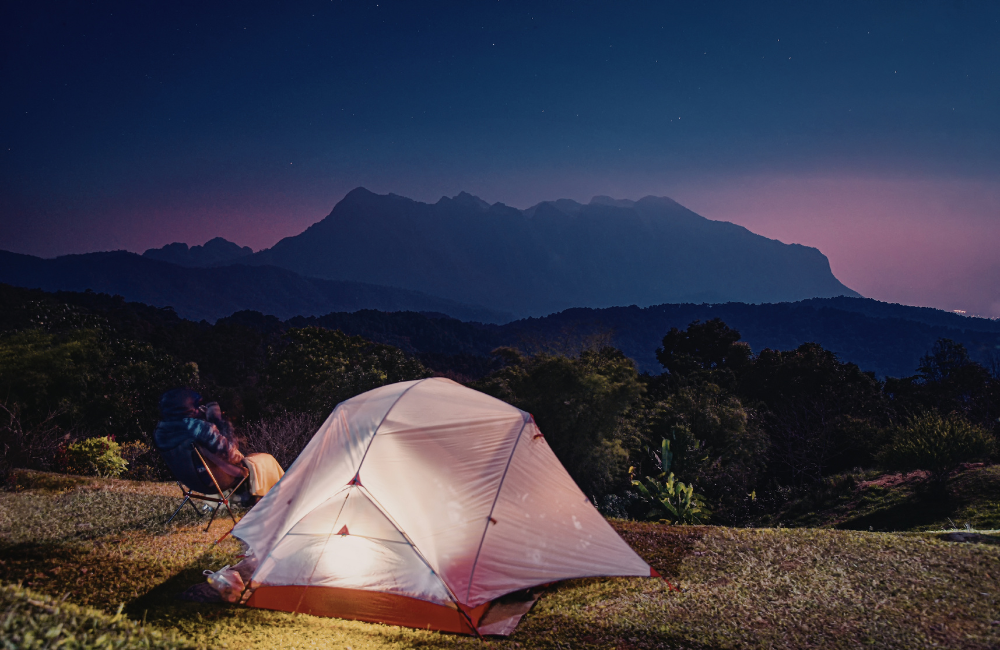
A night hike can be one of the best ways to experience a trail. Everything feels different after dark. The air is cooler, the crowds disappear, and even familiar paths suddenly feel wild again.
But night hiking is also less forgiving than a daytime stroll.
A missed turn, dead battery, or soggy layer feels a lot more annoying when you’re stumbling about in the dark, wondering why this seemed like a brilliant idea.
So here’s exactly what I bring on a night hike, plus the safety checks I never skip before heading out.
Ready? Let’s roll.
My 11-item night hike gear checklist
Here’s my essential night hike gear.
1. Digital night vision goggles
I’ll start with the fun one.
A solid pair of digital night vision goggles isn’t essential for every night hike, but it can be a brilliant extra if you’re hiking in very low light, scanning for trail markers, or trying to spot wildlife without blinding everything with a beam.
I still wouldn’t use them as my only visibility tool. For me, they work best as an add-on, not a replacement for a proper headlamp.
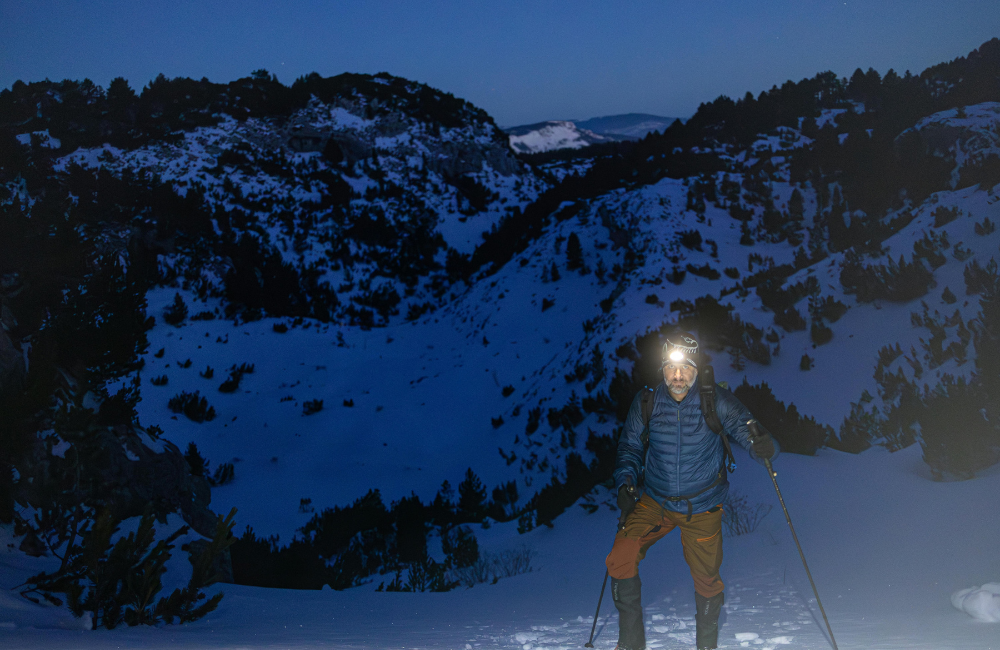
2. A reliable headlamp
This is the real hero of any night hike.
I always bring a proper headlamp rather than relying on my phone torch. A headlamp keeps my hands free, throws light where I’m actually looking, and makes everything from scrambling over rocks to checking a map far easier.
If you need one, we already have a handy guide to the best headlamps for hiking.
My rule is simple: if I’m night hiking, I want a headlamp I trust, not one I vaguely remember charging three weeks ago.
3. Spare batteries or a backup light
One light is none. Two lights are one.
That might sound dramatic, but a dead headlamp halfway through a night hike is a genuinely rubbish way to improve your character. I always pack spare batteries, and if I’m going anywhere remote, I’ll throw in a small backup torch as well.
This is one of those tiny pieces of preparation that feels unnecessary right up until it really, really isn’t.
4. A fully charged phone with offline maps
Even on a straightforward night hike, I want navigation backup in my pocket.
Before I leave, I download the route, check signal coverage, and make sure my phone is fully charged.
If you’re still figuring out which apps are actually worth using, MountainIQ’s guide to the best hiking apps is a good place to start.
If you prefer dedicated navigation gear, have a look at our picks for the best hiking GPS.
I’m all for confidence on the trail, but confidence without navigation is just a scenic way to get lost.
5. Proper hiking boots or trail shoes
Night hiking makes the ground feel more awkward. Roots appear late. Loose stones come out of nowhere. That innocent-looking patch of trail turns out to be a twisted ankle with excellent marketing.
That’s why I want proper footwear with grip that I trust. If you’re due an upgrade, MountainIQ’s round-up of the best hiking boots is worth a look.
For shorter summer routes, I might wear trail shoes. For uneven, muddy, or steeper terrain, I lean towards supportive boots every time.
6. Weather-ready layers
A night hike nearly always feels colder than expected, especially once you stop moving.
Even if the forecast looks mild, I bring an extra insulating layer and a lightweight waterproof shell. Dark trails, wind, sweat, and a temperature drop can turn a “pleasant evening walk” into “why are my teeth doing Morse code?” surprisingly quickly.
If you want a broader packing reference, I’d also check this essential hiking survival kit and gear guide.
7. Water and electrolytes
I drink more on a night hike than I think I’ll need, because cooler temperatures can fool me into thinking I’m fine when I’m actually just quietly dehydrating.
For short hikes, a bottle is enough.
For longer routes, I prefer a bladder setup because it makes sipping on the move much easier. We have a useful guide to the best hydration bladders if you’re weighing up options.
And yes, I usually pack electrolytes too. They take up almost no space and can make a big difference on warm evenings or hillier routes.
8. Easy trail snacks
I never head out on a night hike without snacks.
Not because I’m planning a moonlit picnic, but because hunger makes everything feel harder, slower, and more irritating. A couple of bars, trail mix, or something sweet lives in my pack on every hike after dark.
This is especially true if the hike runs longer than expected. And let’s be honest, “we’ll just do a quick one” is language for “this may become a whole thing.”
9. A small first aid kit
I’m not lugging a hospital around, but I do always carry the basics: blister plasters, pain relief, antiseptic wipes, tape, and a few bandages.
Most night hikes go perfectly smoothly.
But if I do catch a foot on a rock or start feeling a hot spot on my heel, I’d much rather sort it there and then than suffer through the rest of the walk like some tragic woodland goblin.
My Pro Tip: Our hiking survival kit covers the sort of basics I like to keep packed.
10. Trekking poles for steep or uneven terrain
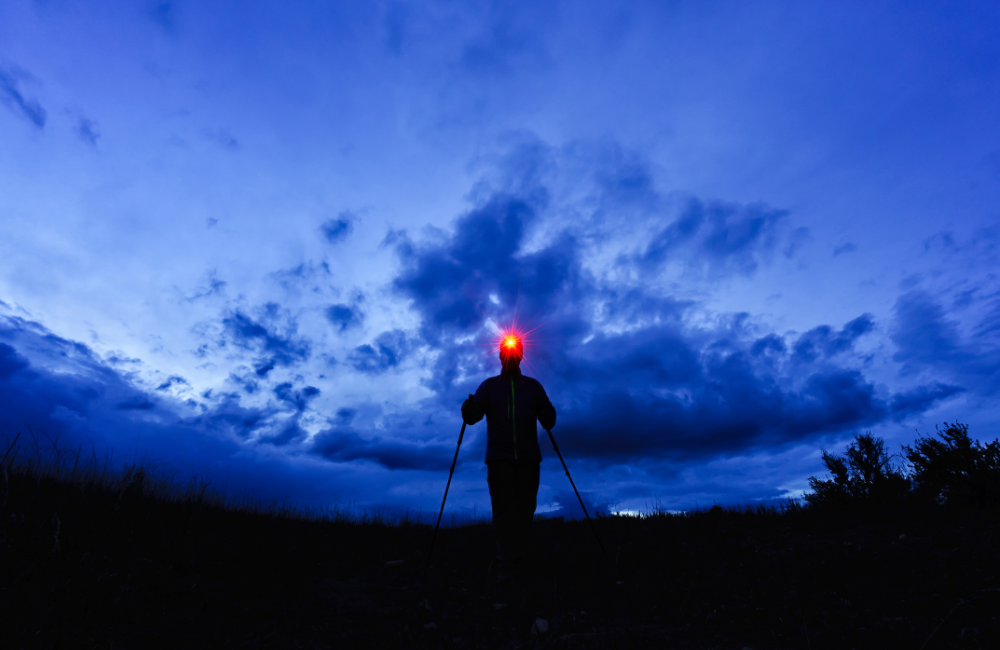
I don’t bring trekking poles on every single night hike, but on rough, steep, or slippery trails, they earn their place.
They help with balance, reduce the strain on descents, and give me a bit more confidence when visibility is limited. If you’re thinking about getting a pair, our guide to the best trekking poles is a solid starting point.
If the route is smooth and familiar, I might skip them. If it’s loose, rocky, muddy, or awkward, they come with me.
11. A compact daypack to keep it all organised
A night hike is not the time for chaos.
I want a small pack that keeps everything tidy and easy to reach: water, layers, snacks, first aid, batteries, done. No rummaging. No mystery pocket. No discovering my headlamp underneath a sandwich and one lonely sock.
If you need one, take a look at MountainIQ’s picks for the best hiking daypacks.
My safety checklist before any night hike
Gear matters, but the real magic is in the boring prep.
Before I head out on a night hike, I always do these five things:
1. I check the route in daylight first if I can
A familiar trail is far better than guessing your way through a brand-new one after dark. If I haven’t hiked it before, I study the route properly and look for junctions, water crossings, and any confusing sections.
2. I check the weather properly
Not “a quick glance at the app” properly. Properly.
Wind, rain, mist, and dropping temperatures matter more at night. Even a simple route can become unpleasant fast if the weather turns.
3. I tell someone where I’m going
I always let someone know the route, start time, and expected finish time. It’s basic, but it matters.
4. I keep my plan realistic
Night hiking is slower than daytime hiking. I don’t try to cram in a massive route, and I’m not out there trying to set a personal best while half the trail is invisible.
5. I use the “10 Essentials” mindset
I’m a big fan of the National Park Service’s 10 Essentials approach. It’s a good reminder that the right kit is less about looking outdoorsy and more about not making silly mistakes when conditions change.
My bonus tip:
If you’re new to night hiking, don’t make your first one a huge mountain epic with sketchy weather and a three-hour drive home afterwards.
Pick a short, familiar trail. Go on a clear evening. Test your kit. Learn what annoys you. Learn what you actually use. Then build from there.
Night hiking is brilliant when it feels deliberate. It’s much less brilliant when it feels like an accidental survival programme.
My final thoughts
And there you have it: an easy-to-follow night hike gear list. For me, the best night hike setup is simple: dependable light, good layers, decent navigation, enough water, a few snacks, and just enough backup gear to keep small problems small.
That’s really the game.
You don’t need to pack your entire house. You just need to bring the things that let you stay comfortable, confident, and switched on once the sun disappears.
And honestly, that’s when a trail gets interesting.
